Clock Speed Realities: What Link Builders Required to Know Now
Handling High-Performance SEO Automation in professional data centers
The technical requirements for running high-speed SEO tools have actually changed significantly by 2026. Software Application like GSA Online Search Engine Ranker (SER) stays a staple for those developing massive backlink profiles, but the hardware and connectivity required to run these programs at maximum capacity have actually progressed. In 2026, the bottleneck is seldom simply the CPU or RAM of a VPS. Instead, the lag between the administrator and the remote user interface typically dictates how effectively a project is managed. When dealing with hundreds of active threads and countless proxies, a sluggish remote desktop connection leads to missed out on data points and sluggish setup changes.Selecting a remote desktop procedure that prioritizes low latency is essential for anybody serious about automation. While the standard Windows Remote Desktop Procedure (RDP) has actually improved, more recent alternatives and specific configurations are required to deal with the high visual and data throughput of 2026-era SEO software. Handling these tools from a remote location needs a connection that feels as fast as a regional machine, particularly when changing real-time filters or monitoring captcha resolve rates.
Efficiency Benchmarks for Microsoft RDP in 2026
Microsoft RDP stays the most common way to access a Windows-based VPS. By 2026, Microsoft has incorporated sophisticated H. 264 and H. 265 (HEVC) compression directly into the procedure, specifically through the AVC444 mode. This update permits far better color accuracy and text clearness, which is valuable when taking a look at thick logs in GSA SER. The default settings are often optimized for workplace work rather than high-speed software monitoring.To get the best performance for SEO tasks, the protocol should be forced to use UDP transport instead of TCP. UDP is faster since it does not need the same handshake and confirmation process for each package. In a high-latency circumstance, TCP can cause the screen to freeze or stutter as it awaits missing out on data. With UDP enabled on a high-spec VPS, the user interface responsiveness enhances drastically. Those concentrating on Asia Virtual Solutions Reliable discover that decreasing user interface lag permits for quicker responses to software mistakes or server resource spikes.Another consider 2026 is making use of hardware velocity. A lot of high-spec SEO VPS plans now include virtualized GPU cores. Enabling RemoteFX or the comparable GPU-sharing innovation within RDP permits the server to unload screen rendering from the CPU. This keeps the CPU cycles committed to GSA SER and its heavy thread counts, guaranteeing that the software application performs at peak performance without the management user interface taking resources.
Alternative Procedures for Low-Latency Management
While RDP is the requirement, other procedures provide exceptional efficiency for users who are physically far from their servers. Teradici CAS (now part of HP Anyware) utilizes the PCoIP (PC-over-IP) protocol, which is extensively thought about among the fastest alternatives available in 2026. PCoIP works by compressing, securing, and sending just pixels to the user gadget. This is different from RDP, which sends high-level graphics commands.PCoIP is especially reliable when the network connection is unstable. It features a "build-to-lossless" capability that guarantees the image remains clear even if the bandwidth drops for a short time. For an SEO expert managing a server fleet in a distant region, this avoids the aggravating "reconnecting" screen that typically plagues basic RDP sessions. Asia Virtual Solutions Proxy Service that Works supplies a stable structure for massive automation when coupled with these high-end procedures, as it allows for constant monitoring without the threat of session timeouts.NoMachine is another contender that has gotten traction in 2026. Using its exclusive NX protocol, NoMachine is extremely effective at handling low-bandwidth situations. It is particularly popular for those who run GSA SER on a Windows VPS but handle it from a Mac or Linux laptop computer. The NX procedure is created to be "network-aware," suggesting it automatically changes its compression levels based on the existing ping and jitter of the connection.
Optimizing GSA Search Engine Ranker on High-Spec VPS
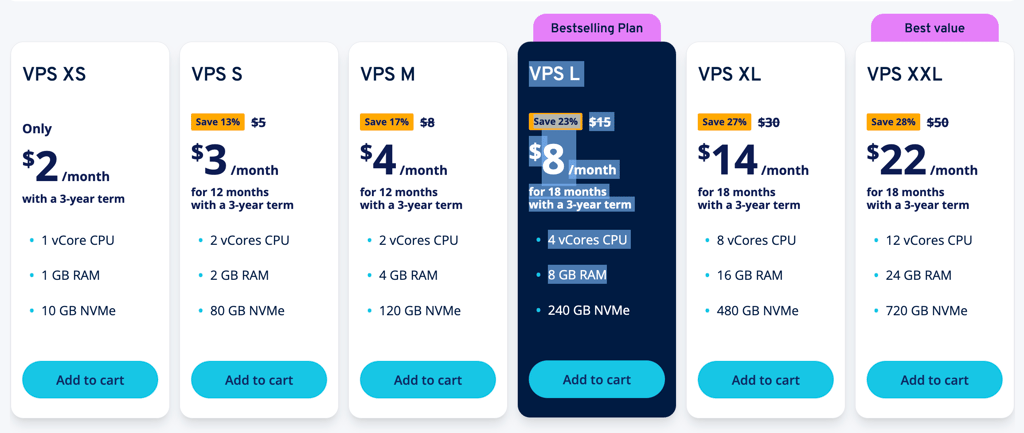
GSA Online Search Engine Ranker is a resource-heavy application. In 2026, a "high-spec" VPS normally consists of a minimum of 8 to 16 vCPUs and 32GB of RAM. However, simply having the hardware is inadequate. The way the software application connects with the operating system can create lag that seems like network latency however is actually a regional resource bottleneck.One typical problem is the way GSA SER handles job logging. If the software is writing 10s of thousands of lines to a log file every minute, the disk I/O can spike, causing the entire GUI to secure. Using NVMe Gen6 storage is standard in 2026, but even with quick drives, it is often much better to disable "show logs" for jobs that are running efficiently. This decreases the work the remote desktop protocol needs to do since there is less text changing on the screen every second.Memory management is likewise crucial. GSA SER can take in large quantities of RAM when running countless threads. If the VPS strikes the pagefile (virtual memory on the disk), the remote desktop session will end up being nearly unusable. Administrators must set the maximum thread count to a level that keeps RAM usage below 80%. This leaves enough headroom for the OS and the remote desktop protocol to work without delay.
Network Setup and Jitter Decrease
Latency is not the only enemy of a smooth remote session; jitter is often even worse. Jitter is the variation in time between information packages showing up. If your ping is 50ms however sometimes leaps to 200ms, the remote desktop will feel choppy. To fight this in the local market, numerous experts utilize a dedicated VPN with a WireGuard-based procedure. WireGuard is much faster and has lower overhead than older VPN procedures like OpenVPN, making it perfect for preserving a stable tunnel to an SEO VPS.Using a wired Ethernet connection instead of Wi-Fi for management is another simple but reliable step. Even the fastest Wi-Fi 7 connections in 2026 can suffer from disturbance, which presents micro-stutters into an RDP session. A physical connection guarantees that the low-latency advantages of the VPS and the protocol are not lost in the "last mile" of the connection.
Hardware-Accelerated Encoding in 2026
Many contemporary VPS environments in the tech sector now utilize specialized hardware for video encoding. When you connect to a remote desktop, the server has to encode the screen as a video stream. In previous years, this was done by the CPU. In 2026, using NVENC (NVIDIA Encoding) or Intel QuickSync on the server side permits near-instant encoding.This shift has an enormous influence on GSA SER management. When you scroll through a list of 50,000 verified URLs, the screen changes quickly. Without hardware encoding, this causes an enormous spike in CPU use and a delay in the visual upgrade. With hardware encoding, the scroll is fluid, permitting much faster auditing and cleaning of website lists.
Security Considerations for Remote SEO Management
Accessing a high-powered VPS requires more than just a quick connection; it requires a secure one. In 2026, simple password-based RDP access is thought about a substantial threat due to the prevalence of automated brute-force attacks. Carrying Out Two-Factor Authentication (2FA) for RDP sessions is now a standard practice. Tools like Duo or Microsoft Authenticator can be incorporated into the Windows login process on the VPS.Furthermore, altering the default RDP port (3389) is a basic however needed step to avoid consistent "knock" attempts from bots. While this does not provide true security, it keeps the logs cleaner and decreases the processing load triggered by the server continuously rejecting stopped working login attempts. For those handling sensitive SEO information, setting up a "Dive Box" or an entrance server is the preferred approach in 2026. This requires the administrator to very first link to a low-resource, highly secured server before they can access the primary VPS where GSA SER is running.
The Role of Bandwidth in 2026 SEO Tasks
While latency is the primary focus for remote desktop feel, the bandwidth readily available to the VPS itself is what drives GSA Browse Engine Ranker's success. In 2026, a 10Gbps uplink prevails for high-spec SEO servers. This massive bandwidth is required since GSA SER is constantly communicating with countless websites, captcha solving services, and indexing APIs simultaneously.If the remote desktop protocol is contending for that same bandwidth, efficiency can suffer. This is why lots of advanced users establish a "Management NIC" (Network User Interface Card) By using one virtual network interface for the software's outgoing traffic and a 2nd one committed solely to the remote desktop connection, you make sure that a surge in SEO activity doesn't cause your management session to lag.
Selecting the Right Company in the global VPS market
Not all VPS companies are equipped for the needs of 2026 SEO automation. When searching for a host to run GSA SER, the focus must be on "bare metal" virtual devices or high-performance KVM (Kernel-based Virtual Device) instances. These provide much better resource seclusion compared to older virtualization methods, guaranteeing that other users on the very same physical server do not affect your procedure's latency.Server location likewise contributes. If the bulk of the target sites for an SEO project are hosted in North America, the VPS needs to be situated there to minimize the latency of the software application's demands. However, the administrator may be in Europe or Asia. In this case, using a procedure like PCoIP or NoMachine becomes even more crucial to bridge that geographic space without a frustrating lag.
Summary of Best Practices for 2026
Enhancing a remote SEO setup includes more than simply buying the fastest server. It requires a tiered approach to connectivity and software management. Start by choosing a procedure that fits the geographic range in between the user and the server. For most, an enhanced RDP setup over UDP with hardware acceleration will be adequate. For those throughout oceans, NoMachine or PCoIP is the better choice.Within GSA Search Engine Ranker, maintain a balance between thread count and available system resources. Avoid graphical bloat by disabling unnecessary logs and animations. By focusing on these technical details, SEO professionals can ensure that their automation tools perform at optimal effectiveness, providing an one-upmanship in the hectic digital environment of 2026. Constant tracking and little modifications to procedure settings can lead to a substantially more efficient workflow and much better general outcomes for intricate search engine ranking projects.