Fixing the VPS Bottleneck: Effective Captcha Service Management
System Requirements and Preliminary Setup for 2026 Link Building

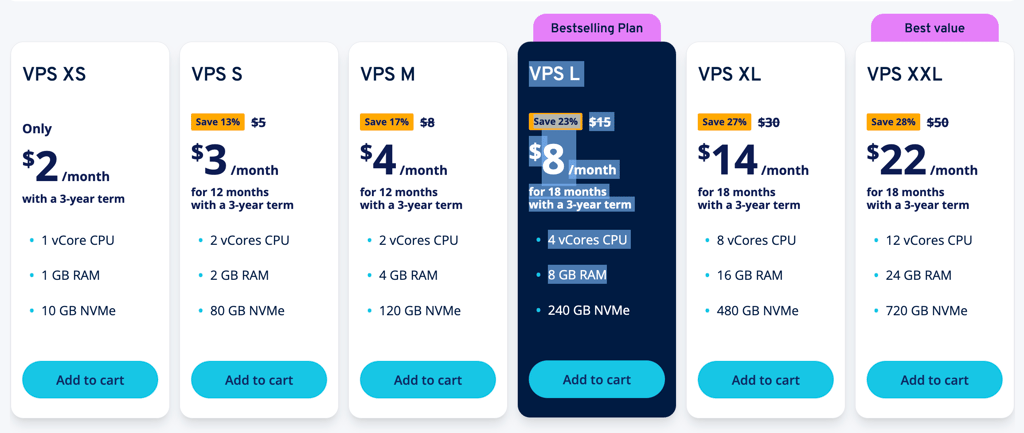
High-performance link structure in 2026 requires a departure from basic server configurations. As online search engine algorithms have actually grown more sophisticated, the volume and quality of automated submissions need to scale appropriately. For those running GSA Online search engine Ranker (SER) on a Windows Server 2026 VPS, the objective is to decrease latency while optimizing the number of simultaneous active threads. A typical high-spec VPS in 2026 frequently features 32 or 64 virtual cores and upwards of 128GB of RAM. Nevertheless, without particular tweaks, Windows will throttle the really processes that GSA SER depends on for high-speed operation.
The initial step includes picking the ideal version of Windows Server 2026. While the Desktop Experience is simpler to browse, the Server Core setup offers a smaller sized footprint and fewer background processes. For those who require the GUI, the very first job after setup is to remove away the telemetry and visual results that take in CPU cycles. Every percentage point of CPU usage saved from the os is another thread readily available for link positioning. Marketers who concentrate on high-performance SEO find that these preliminary steps dictate the ceiling of their day-to-day confirmed link counts.

Enhancing the Windows Server 2026 Networking Stack
Windows Server 2026 handles network connections differently than its predecessors. By default, the system is tuned for consistent, long-term connections instead of the countless rapid-fire, short-lived connections generated by GSA SER. To fix this, you need to customize the windows registry to deal with a greater volume of TCP/IP traffic. Increasing the MaxUserPort setting permits the system to open more ephemeral ports all at once. In 2026, setting this worth to its maximum of 65534 is standard practice for high-thread counts.
Another essential change is the TcpTimedWaitDelay. This setting identifies for how long a connection remains in the TIME_WAIT state before the port is released back into the pool. Lowering this from the default 240 seconds down to 30 seconds guarantees that ports are recycled quickly. Without this modification, GSA SER may report thousands of threads, however the real outbound connections will be topped by the OS, leading to a high variety of socket errors. Those who have actually bought Asia Virtual Solutions Simple Proxy Setup comprehend that network throughput is typically the most typical concealed traffic jam in automated campaigns.
CPU Affinity and Priority Management
Windows Server 2026 uses an updated scheduler that is much better at managing high core counts, but GSA SER can still deal with thread contention when the CPU is pressed to 90% use. One way to manage this is by setting the process priority of GSA SER to "Above Regular" or "High." This guarantees that the software gets initially access to CPU cycles ahead of background system jobs. It is rarely suggested to use "Realtime" concern, as this can lock up the whole OS, making the VPS unresponsive.
For servers with numerous physical CPUs or NUMA nodes, setting CPU affinity can avoid the overhead of thread migration in between cores. If you are running multiple circumstances of GSA SER, or if you are running a captcha solver alongside it, designating each application to specific cores can enhance performance. Appointing a captcha breaker to cores 0-7 and GSA SER to cores 8-31 prevents the heavy OCR processing from slowing down the submission engine. This granular control is what separates a basic setup from one efficient in sustaining 2000+ threads without crashing.
Storage Efficiency and SQL Lite Handling
In 2026, NVMe Gen 7 drives are the requirement for high-spec VPS suppliers. GSA SER relies heavily on small read and compose operations, especially when upgrading its SQL Lite databases and task files. The speed of these disks is essential. To even more improve effectiveness, it is possible to move the GSA SER "AppData" folder to a RAM disk. Considering That 128GB of RAM is typical in 2026, allocating 16GB to a high-speed RAM disk can essentially eliminate disk I/O wait times.
If a RAM disk is not an option, guarantee that Windows Write Caching is enabled on your NVMe drive. In addition, the GSA SER internal settings for database maintenance must be set up to "vacuum" the databases routinely. Large project files with countless target URLs can decrease the software as it looks for the next site to publish to. Keeping these files on the fastest available storage tier makes sure that the threads are not idling while waiting for the disk to react. Experience with Asia Virtual Solutions Easy recommends that even the fastest CPU can not compensate for slow disk gain access to during high-volume durations.
Setting Up GSA SER Internal Thread Settings
As soon as the os is tuned, the focus moves to the software application settings. A typical mistake is setting the thread count too high immediately. In 2026, the sweet area for a 32-core VPS is often between 800 and 1200 threads, depending on the intricacy of the websites being targeted. If you use heavy engines like those needing complete internet browser emulation, this number will be lower. If you are focusing on quick engines like blog remarks or guestbooks, you can push the count greater.
The "Timeouts" setting in GSA SER is also a significant element in thread efficiency. If a thread is waiting 180 seconds for a website to load, it is a wasted resource. In 2026, most fast-loading websites respond in under 10 seconds. Setting the timeout to 30 or 45 seconds allows GSA SER to drop slow targets and proceed to the next one. This keeps the thread pool active and efficient. Keeping track of the "Threads" vs. "Active" display in the software assists figure out if your timeouts are too long or your proxies are too sluggish.
Handling Security and Firewall Overload
Windows Protector in Server 2026 is much more aggressive than in previous variations. Its real-time scanning can significantly slow down GSA SER as it constanty checks the thousands of small files developed during the submission procedure. It is required to include the GSA SER setup folder and the project information folders to the Defender exclusion list. Some users select to disable the firewall entirely if the VPS is behind a hardware firewall software supplied by the host, but this should be made with care.
The firewall program itself can likewise become a bottleneck. Every new connection is checked against the firewall software guidelines. If you have a huge list of obstructed IPs or intricate guidelines, the CPU overhead per connection increases. Keeping the firewall software guidelines simple and using GSA SER's internal "International Blacklist" for bad IPs is typically a more effective method to handle security without sacrificing speed. This approach keeps the system lean and concentrated on the main job of link generation.
Proxy Latency and Connection Stability
No quantity of server optimization can fix poor proxy performance. In 2026, the market has actually moved towards high-speed backconnect property proxies that can manage hundreds of concurrent requests. When configuring these in GSA SER, it is essential to match the thread count to the variety of proxy connections allowed by your service provider. If you have 500 proxy slots however run 1000 threads, half of your threads will continuously stop working with connection errors.
Testing proxy speed routinely is a requirement. GSA SER has a built-in proxy tester, however it is typically much better to use a dedicated tool to filter out any proxies with a response time over 1000ms. In 2026, low-latency connections are the main motorist of high success rates. By making sure that the server and the proxies are in the exact same geographical region, or at least on the same foundation, you can shave milliseconds off each request, which includes up to countless additional submissions over the course of a day.
Upkeep and Long-Term Stability
A Windows Server 2026 VPS performing at complete throttle will ultimately come across memory leaks or fragmented resources. A scheduled everyday reboot is an easy however efficient way to preserve peak efficiency. This clears the system cache and resets any hung procedures. Additionally, cleaning out old "Recognized" and "Sent" logs every couple of days keeps the project submits little and snappy. GSA SER performs best when it is not bogged down by months of historical data that is no longer required for active campaigns.
Monitoring tools can offer alerts if CPU or RAM use surpasses certain thresholds for too long. In 2026, many VPS suppliers consist of fundamental monitoring dashboards that show these metrics in real-time. If you notice that your thread count remains high but your submission rate drops, it is normally a sign that the OS is fighting with a resource bottleneck or your proxies are failing. Routine adjustments to the setup make sure that the system stays enhanced for the changing needs of the online search engine. Remaining ahead in the 2026 SEO world needs a combination of high-end hardware and a completely tuned os environment.