Mastering Worldwide Implementations by means of Multi-Cloud Orchestration

Modern Strategies for Dispersed Environments in 2026
The functional requirements for high-performance computing have actually shifted considerably as 2026 advances. Organizations no longer view several cloud service providers as a high-end or a backup plan. Instead, the focus has approached advanced coordination in between diverse environments to make sure speed and uptime. Manual intervention for resource allotment is largely a distant memory. Modern control airplanes now handle millions of micro-adjustments per 2nd, making sure that workloads live where they are most effective based upon real-time latency and cost metrics.
Data residency laws and regional performance requirements have required a relocation away from centralized architectures. Large business typically find themselves handling workloads across 4 or 5 various companies. This intricacy needs a unified management layer that abstracts the hidden infrastructure. By 2026, the market has chosen standardized protocols that enable containers and serverless functions to move across service providers with minimal setup modifications. This fluidity is essential for maintaining an one-upmanship in markets where milliseconds of delay outcome in lost earnings.
High-Performance Demands and Distributed Infrastructure
Performance requirements in 2026 are driven by the massive growth of real-time information processing. Whether it is self-governing logistics or high-frequency financial modeling, the underlying hardware needs to react immediately. Specialized hardware, such as advanced processing units, is often distributed across various regions to keep calculate resources close to the information source. This geographical spread prevents the bottlenecking that prevailed when data had to travel back to a main information center.
Effectiveness in 2026 is measured by the capability to scale vertically and horizontally without over-provisioning. Modern orchestration tools utilize predictive analytics to prepare for traffic spikes. If a localized occasion causes a sudden rise in need, the system immediately spins up instances in the nearest readily available zone, regardless of which business owns the physical server. This level of coordination depends on deep integration with application programming interfaces that have actually ended up being more consistent throughout the industry over the last couple of years.
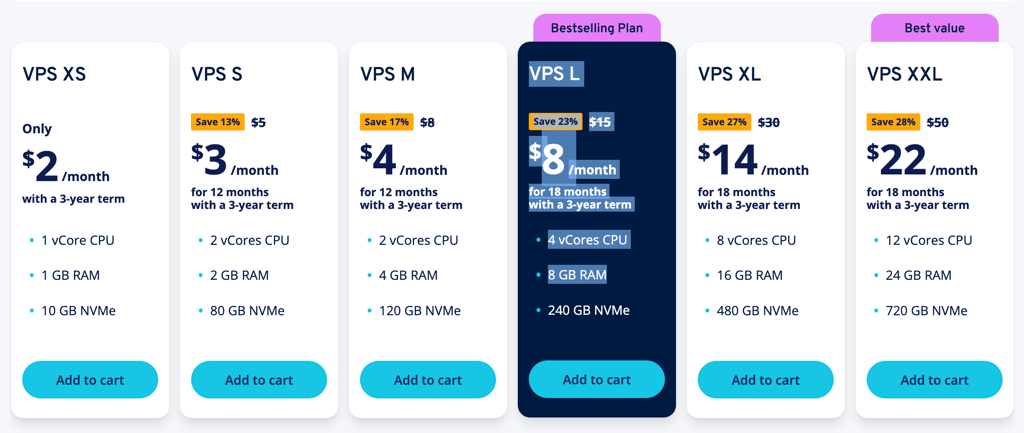
Technical groups are focusing on SEO NEO Pricing to manage these intricate interactions. This method reduces the overhead related to maintaining separate workflows for each company. Instead of having experts for every single different cloud environment, engineers now use a single interface to define the wanted state of the entire system. The orchestration layer then deals with the particular translations needed for each target environment, guaranteeing consistency in security policies and performance standards.
Scalability Solutions and Resource Optimization
The expense of compute power remains a significant consider 2026. While raw processing power has actually become more budget-friendly, the energy requirements for massive data centers have led to variable pricing based upon the time of day and regional power availability. Smart orchestration systems now consist of "carbon-aware" and "cost-aware" reasoning. These systems can move non-critical batch jobs to areas where renewable energy production is at its peak or where spot prices is at its lowest. This automatic monetary management is a need for preserving healthy margins in data-heavy sectors.
Scalability is no longer practically adding more servers. It involves the smart circulation of stateful and stateless components. In 2026, the usage of Asia Virtual Solutions Cloud SEO Review has actually become a basic method for guaranteeing that user information stays accessible even throughout provider-specific failures. By sharding information throughout multiple clouds, companies protect themselves against the overall failure of a single supplier. This strategy likewise helps in complying with strict data sovereignty guidelines that require particular information to stay within particular nationwide borders while still being available to international applications.
Automated troubleshooting has likewise reached a new level of elegance. When a performance destruction is discovered, the orchestration layer does not simply signal a human operator. It initiates a series of diagnostic tests and, if needed, moves the affected services to a healthy environment. This self-healing capability is essential for 2026 facilities, where the sheer variety of moving parts makes manual monitoring difficult for even the largest groups.
The Function of Intelligence in System Coordination
Machine learning models committed to system health are now embedded straight into the orchestration stack. These models evaluate historical performance information to recognize patterns that precede a failure. By 2026, these systems can identify "quiet" failures-- instances where a service seems running but is returning incorrect data or responding too slowly. The system can then separate the bothersome node and replace it without any impact on completion user.
The need for Asia Virtual Solutions for Modern Marketers shows the growing need for customized know-how in these automated environments. Keeping the reasoning that governs these shifts needs a deep understanding of both networking and software application architecture. As 2026 continues, the space in between traditional IT management and modern-day automatic orchestration broadens. Success depends on the capability to trust the automation while maintaining sufficient oversight to step in when the designs experience an unprecedented situation.
Security in a multi-cloud environment has actually approached a zero-trust model that is enforced at the orchestration level. Every interaction in between services, despite whether they are on the exact same cloud or different ones, is encrypted and verified. Identity management has actually ended up being the brand-new perimeter. By 2026, the orchestration layer handles the rotation of security secrets and the enforcement of least-privilege gain access to throughout the entire fleet of servers. This makes sure that a breach in one little part does not jeopardize the stability of the whole system.
Future Outlook for Facilities Resilience
Looking ahead through the remainder of 2026, the focus will likely shift toward even tighter combination in between edge devices and core cloud environments. The distinction in between a "server" and a "device" is ending up being significantly blurred. Orchestration tools are now handling workloads on local 5G base stations and even high-capacity commercial sensors. This extension of the cloud to the extreme edge permits for processing speeds that were formerly thought impossible.
Durability is constructed into the really material of these systems. The 2026 method to facilities is among continuous motion. Services are not fixed; they are perpetually being enhanced, moved, and upgraded. This environment needs a shift in state of mind from constructing "irreversible" structures to handling "streaming" resources. The organizations that thrive are those that can adjust their resource consumption in real-time, benefiting from the very best offered technology at any offered second.
The reliance on automated resource managers will only increase as data volumes grow. The complexity of 2026 technology requires a level of precision that human operators simply can not match. By offloading the repeated tasks of scaling, patching, and balancing to specialized orchestration layers, technical groups are free to concentrate on the top-level reasoning that drives their specific industry forward. This transition marks a new period in calculating where the physical place of a server is secondary to the reasoning that manages it.
Standardization will continue to be a primary style. As more suppliers adopt open-source orchestration requirements, the friction of moving in between clouds will continue to reduce. This competition among providers is beneficial for the end user, as it drives down costs and encourages the fast rollout of brand-new features. In 2026, the cloud is no longer a destination however an utility that is consumed as required, managed by smart systems that ensure every byte of data is handled with maximum efficiency.