Optimizing Mobile App Action Times Utilizing Edge Nodes

The Shift Towards Decentralized Intelligence in 2026
The architecture of digital applications has gone through an extreme shift as 2026 unfolds. For many years, the market leaned on central information centers to handle every computation, however the physical constraints of light speed and fiber optics ultimately struck a wall. In the present environment, the focus has moved from enormous, far-off server farms to smaller, localized nodes that process information precisely where it is created. This transition is driven by the increase of autonomous equipment, sophisticated wearable medical gadgets, and augmented truth systems that require response times under five milliseconds.Moving data backward and forward to a central center develops a traffic jam that 2026 innovation can no longer endure. Modern architects are instead constructing distributed systems that treat the edge not just as a cache, but as a primary compute layer. By placing high-density silicon near the user, organizations can filter, examine, and act on data without awaiting a round-trip to a regional data center. This technique significantly reduces the pressure on backhaul networks and ensures that crucial security systems in self-driving automobiles or robotic surgery systems operate regardless of wider internet interruptions.
Optimizing Distributed Infrastructure for Low-Latency Efficiency

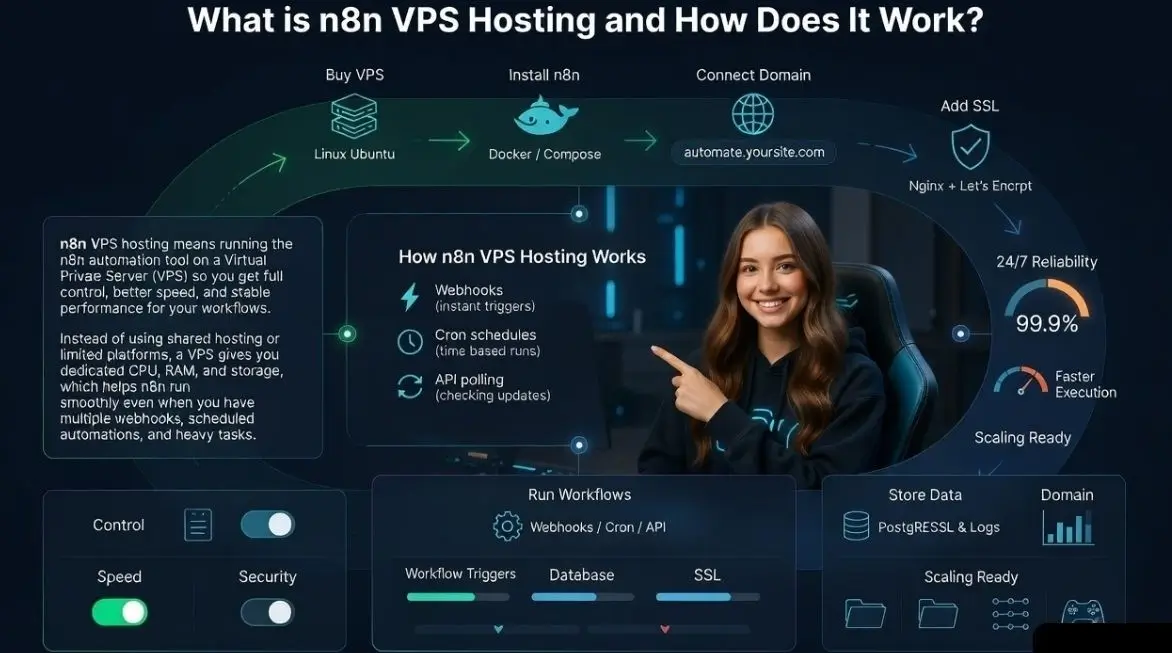
The physical positioning of hardware is only half the battle. Software orchestration need to be similarly nimble to handle thousands of small "micro-clouds" scattered throughout a city. Numerous organizations now depend on specialized automation to deal with the deployment of containers to these different places. Utilizing a mix of localized compute resources,. developers can now press particular application logic to the periphery while keeping heavy historical storage in the core.Efficiency in these environments depends upon how well the system manages information gravity. When sensing units produce terabytes of info every hour, moving that data is pricey and slow. The most efficient 2026 architectures process the "hot" information-- information that requires an instant response-- in your area. Only the summed up "cold" information is sent out back for long-lasting archiving. This tiered method is a staple in modern smart-city projects where cameras evaluate traffic patterns in real-time at the pole, just reporting blockage statistics to the main office. Numerous markets now depend on Asia Virtual Solutions VPS to maintain functional effectiveness and keep expenses workable.
Hardware Innovations Powering the 2026 Edge
The servers found at the edge today look nothing like the rack-mounted systems of the previous decade. In 2026, we see a surge in fanless, solidified units equipped with specialized Neural Processing Systems (NPUs) These chips are designed particularly for inference, allowing gadgets to run complicated machine learning models with minimal power consumption. This hardware permits sophisticated image recognition and voice processing directly on the device, which is important for personal privacy and speed.Reliability in these areas is a significant issue. Edge nodes typically sit in harsh environments-- attached to cell towers, inside factory floorings, or tucked into utility boxes. These systems need to endure temperature level swings and vibration while preserving a constant connection. To resolve this, 2026 architectures frequently include redundant mesh networking, where nodes can speak with each other to discover a course back to the internet if one link stops working. VPS for Asia Virtual Solutions has actually become a staple for developers who need to guarantee their applications stay online even during localized hardware failures.
Data Consistency and Synchronization Challenges
Maintaining a single variation of the truth across a thousand different edge places is a considerable technical obstacle. Traditional databases often struggle with the latency associated with international locking mechanisms. Instead, architects in 2026 use Conflict-free Replicated Data Types (CRDTs) and eventual consistency designs. These permit each edge node to continue running individually during a network split, combining their modifications once the connection is restored.This decentralized data design is particularly beneficial for retail and logistics. A delivery drone or a smart storage facility robotic can update its stock log locally and sync with the wider system when it passes a high-speed transit point. This makes sure that the maker is never waiting for a "success" signal from a server three states away before it can relocate to its next task. Engineers are progressively looking for Asia Virtual Solutions for VPS Hosting to fix these specific synchronization problems in remote areas.
Security Protocols for a Perimeter-less Environment
The expansion of the compute boundary develops a much larger surface for possible attacks. In 2026, the old "castle and moat" security viewpoint is dead. Every edge node is treated as a potential point of compromise, resulting in the widespread adoption of zero-trust architectures. Each micro-service should prove its identity before it can interact with another, and data is encrypted both at rest and in transit utilizing hardware-level keys.Confidential computing has likewise end up being a basic requirement. By utilizing Trusted Execution Environments (TEEs), 2026 applications can process delicate user information in a safe and secure enclave that even the owner of the physical hardware can not access. This is important for edge hosting providers who serve customers in the financial or health care sectors. If a node is physically taken from a street corner, the information remains scrambled and worthless without the appropriate cryptographic heartbeat from the main management system.
The Function of 6G and Advanced Connection
While 5G prepared, the initial rollout of 6G screening in 2026 is providing the high-frequency bands needed for enormous device density. These connections offer the bandwidth required for holographic interaction and real-time digital twins. In industrial settings, this indicates a factory supervisor can view a real-time 3D overlay of the assembly line, with every sensor reading shown in the design with no noticeable lag.The integration of satellite-based internet has actually likewise altered the logic of the edge. Remote mining sites or maritime vessels can now act as edge nodes that sync via low-earth orbit constellations. This permits high-performance computing in locations that were formerly digital dead zones. The architecture needs to be clever enough to change in between cellular, satellite, and local Wi-Fi based upon cost and signal strength, a procedure referred to as multi-access edge computing.
Scalability and the Future of Cloud Hybrid Systems
Scaling a system in 2026 includes more than just spinning up more virtual machines. It needs an advanced understanding of where the users are and what resources are readily available in their immediate vicinity. Orchestrators now utilize predictive analytics to move workloads towards geographical locations where a rise in traffic is expected. During a significant sporting event, the system will immediately provision more capability at the arena's edge nodes hours before the gates open.This flexibility is the hallmark of a mature high-performance infrastructure technique. By blending the limitless storage of the core cloud with the rapid response of the edge, companies can offer a level of service that feels instant. This hybrid approach does not just enhance the user experience-- it alters what is possible to develop. Applications that were once considered sci-fi, such as real-time language translation in natural conversation or city-wide autonomous traffic coordination, are now ending up being everyday truths thanks to these architectural advancements.
Last Observations on Dispersed Systems
The transfer to the edge is not an overall desertion of the cloud, but an improvement of it. In 2026, the most effective applications are those that do not care where the code is running. They are developed to be fluid, moving from a smart device to a regional tower to a regional data center as the scenario demands. This flexibility guarantees that as we move further into the decade, our digital tools stay as quick and responsive as the physical world they connect with. The focus remains on reducing the range in between the concern and the answer, guaranteeing that the 2026 digital experience is defined by its speed, its dependability, and its invisibility.