Real-Time Performance: The Role of Edge Architecture

Hardware-Level Seclusion in 2026 Virtual Server Environments
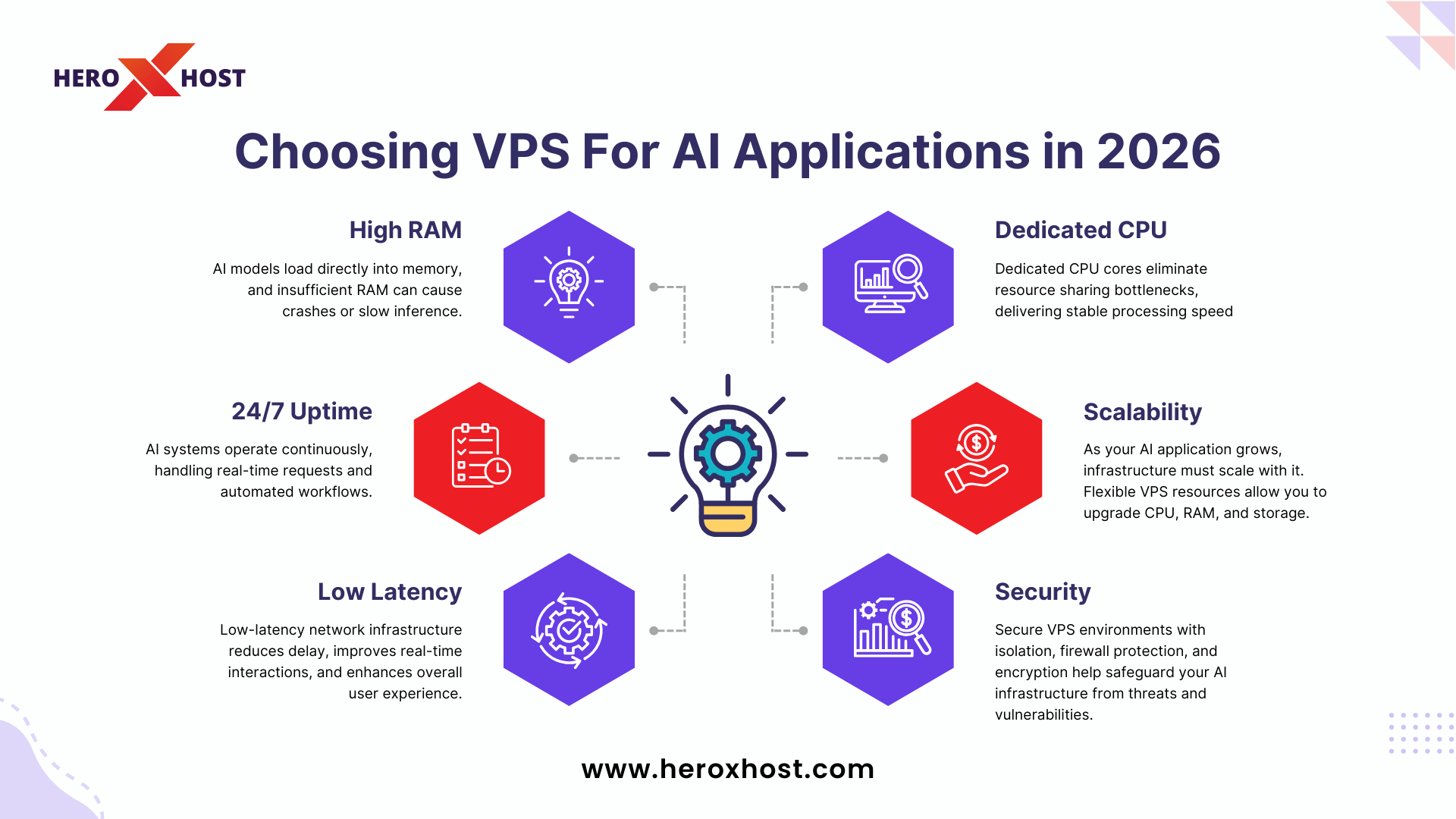
The requirement for virtual personal server security in 2026 has shifted from software-based firewall softwares to hardware-enforced isolation. As data breaches became more advanced early in the decade, the market moved towards Confidential Computing. This innovation uses Trusted Execution Environments (TEEs) to secure data while it is being processed in the system memory. In 2026, any high-performance hosting service that lacks silicon-level encryption is considered obsolete. This shift ensures that even if a hypervisor is compromised, the information living within specific virtual devices stays encrypted and inaccessible to unauthorized actors.
Hardware service providers have actually presented specialized instructions in 2026 processors that specifically manage memory tagging. This prevents common exploits like buffer overflows and use-after-free vulnerabilities at the physical level. For organizations managing delicate information, these 2026 standards supply a layer of certainty that was previously difficult. Memory seclusion is no longer a high-end feature however a foundational requirement for any server instance. Those who focus on security in Asia Virtual Solutions Performance regularly confirm that their suppliers utilize 2026-grade chipsets with active memory file encryption allowed by default.
Executing Zero Trust for High-Performance Infrastructure
The principle of a safe border has actually mostly vanished in 2026. Instead, No Trust Architecture (ZTA) governs how virtual servers communicate within a network. Every request, whether it originates from a recognized internal IP or an external source, needs rigorous authentication and permission. In 2026, identity-based security has changed static IP whitelisting. This implies that gain access to is granted based upon the identity of the service or user, validated through multi-factor authentication and cryptographic certificates that rotate every couple of minutes.
Micro-segmentation is another pillar of 2026 VPS security. By dividing the virtual network into granular segments, administrators can include hazards before they spread. If one server is targeted, the rest of the network stays protected since there is no fundamental trust between nodes. Decision-makers discovering worth in Asia Virtual Solutions High Speed Hosting often indicate this granular control as a reason for its widespread adoption. 2026 systems use automated policies to change these segments in real-time based upon the present threat level, making sure that efficiency stays high while defense remains tight.
Identity-aware proxies have also end up being a basic part of the 2026 stack. These proxies act as a gatekeeper, examining every packet not just for its destination, however for the intent and permission of the sender. This level of analysis happens at the edge of the network, decreasing the load on the actual VPS and preserving the high-performance standards needed by contemporary applications.
Scalability and Automated Threat Mitigation
Among the most substantial developments in 2026 is the combination of maker learning for real-time danger mitigation. Standard signature-based antivirus tools are too slow for the speed of 2026 cyber-attacks. Modern systems use behavioral analysis to determine abnormalities in server efficiency or network traffic. If a VPS starts exhibiting unusual outgoing traffic patterns, the 2026 security layer can immediately throttle the connection or move the circumstances to a quarantined "sandbox" for more assessment without human intervention.
This automation is linked straight to cloud scalability. When a security danger is found, the 2026 facilities can spin up a clean mirror of the server while the suspicious one is analyzed. This process makes sure no downtime for the end-user. The capability to scale resources during an attack-- such as a Dispersed Denial of Service (DDoS) occasion-- is a trademark of 2026 server management. Modern scrubbers can handle terabits of malicious traffic per 2nd, straining the noise while enabling legitimate users to access the application without lag.
Growing demand for Asia Virtual Solutions for SEO Automation has resulted in the development of localized security nodes. these nodes process security checks more detailed to the user, which is a significant aspect in the high-performance outcomes seen in 2026. By unloading the heavy lifting of decryption and package inspection to specialized edge hardware, the main VPS can devote its CPU and RAM to core application jobs. This separation of duties is an essential reason 2026 servers are considerably faster than those from just a couple of years ago.
Information Sovereignty and Compliance in 2026
Regulative requirements have actually ended up being more rigid in 2026, needing precise control over where information is kept and processed. VPS service providers now offer "sovereign clouds" where hardware is physically located in specific jurisdictions and managed under local laws. Security standards in 2026 include automated compliance auditing, where the system creates real-time reports to show that data has actually not left its designated area. This is especially pertinent for monetary services and doctor who should adhere to stringent 2026 personal privacy mandates.
File encryption keys are no longer handled by the company in most 2026 setups. "Bring Your Own Key" (BYOK) and "Hold Your Own Key" (HYOK) designs are the standard. This guarantees that even if a government or a third party subpoenas the hosting company, the data remains unreadable due to the fact that the provider does not have the secrets. This level of autonomy is a major part of the 2026 security standard, providing users total ownership over their digital assets.
As we take a look at the 2026 environment, the focus is on a multi-layered defense. From the physical silicon to the automated network policies and the user-controlled file encryption secrets, every layer is designed to be independent yet collaborative. High-performance infrastructure in 2026 is defined by its ability to stay quick and responsive even while under continuous monitoring and potential attack. The mix of hardware isolation, zero-trust procedures, and automatic response systems makes the 2026 VPS a far more resilient choice for any modern enterprise.
By sticking to these 2026 requirements, organizations can concentrate on development and development. The infrastructure handles the complexities of defense, permitting developers to deploy code with self-confidence. The 2026 shift towards incorporated, hardware-first security has developed a more steady and foreseeable environment for everyone associated with the digital economy.