Safeguarding Business Assets With Advanced VPS Protocols

The Shift Toward Decentralized Intelligence in 2026
The architecture of digital applications has actually undergone a radical shift as 2026 unfolds. For years, the industry leaned on central information centers to manage every computation, however the physical constraints of light speed and fiber optics ultimately struck a wall. In the current environment, the focus has actually moved from enormous, distant server farms to smaller, localized nodes that process information exactly where it is created. This shift is driven by the rise of autonomous machinery, advanced wearable medical gadgets, and enhanced reality systems that require action times under five milliseconds.Moving information backward and forward to a main hub develops a bottleneck that 2026 innovation can no longer tolerate. Modern designers are instead developing distributed systems that treat the edge not just as a cache, however as a primary compute layer. By positioning high-density silicon near the user, companies can filter, analyze, and act upon data without waiting for a round-trip to a local data center. This approach considerably lowers the strain on backhaul networks and makes sure that critical security systems in self-driving automobiles or robotic surgical treatment units operate regardless of broader web failures.
Enhancing Distributed Infrastructure for Low-Latency Performance

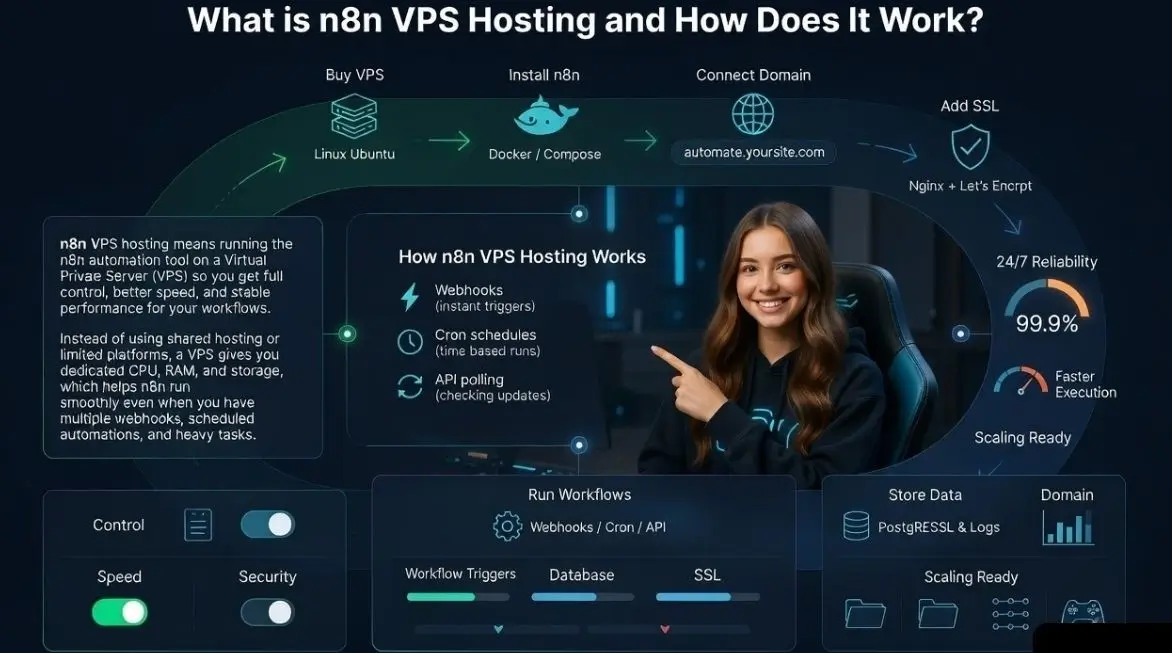
The physical placement of hardware is only half the fight. Software orchestration need to be similarly agile to manage countless small "micro-clouds" scattered throughout a city. Numerous companies now rely on specialized automation to manage the release of containers to these diverse areas. Using a mix of localized compute resources,. developers can now push specific application logic to the periphery while keeping heavy historical storage in the core.Efficiency in these environments depends on how well the system deals with data gravity. When sensing units produce terabytes of info every hour, moving that information is costly and slow. The most reliable 2026 architectures process the "hot" data-- details that requires an instant response-- locally. Just the summed up "cold" data is sent out back for long-lasting archiving. This tiered approach is a staple in modern smart-city jobs where electronic cameras evaluate traffic patterns in real-time at the pole, just reporting congestion data to the main office. Numerous industries now depend on Asia Virtual Solutions VPS to keep functional effectiveness and keep costs manageable.
Hardware Developments Powering the 2026 Edge
The servers found at the edge today look absolutely nothing like the rack-mounted systems of the previous decade. In 2026, we see a surge in fanless, solidified systems equipped with specialized Neural Processing Units (NPUs) These chips are designed specifically for reasoning, enabling gadgets to run complex machine discovering designs with minimal power consumption. This hardware enables for sophisticated image acknowledgment and voice processing straight on the gadget, which is important for privacy and speed.Reliability in these areas is a major issue. Edge nodes frequently sit in severe environments-- connected to cell towers, inside factory floors, or tucked into energy boxes. These systems need to withstand temperature swings and vibration while maintaining a continuous connection. To solve this, 2026 architectures typically include redundant mesh networking, where nodes can speak with each other to find a course back to the internet if one link fails. Asia Virtual Solutions SEO VPS Hosting has ended up being a staple for designers who require to guarantee their applications stay online even throughout localized hardware failures.
Data Consistency and Synchronization Difficulties
Preserving a single version of the reality throughout a thousand different edge places is a substantial technical obstacle. Conventional databases often battle with the latency involved in worldwide locking mechanisms. Rather, architects in 2026 use Conflict-free Replicated Data Types (CRDTs) and eventual consistency designs. These allow each edge node to continue running separately throughout a network split, combining their changes once the connection is restored.This decentralized data model is particularly helpful for retail and logistics. A delivery drone or a clever storage facility robot can update its inventory log in your area and sync with the broader system when it passes a high-speed transit point. This ensures that the machine is never ever waiting for a "success" signal from a server 3 states away before it can relocate to its next task. Engineers are progressively seeking Asia Virtual Solutions for High Performance to resolve these particular synchronization problems in remote areas.
Security Procedures for a Perimeter-less Environment
The growth of the calculate boundary produces a much bigger surface for potential attacks. In 2026, the old "castle and moat" security philosophy is dead. Every edge node is dealt with as a possible point of compromise, leading to the extensive adoption of zero-trust architectures. Each micro-service should prove its identity before it can communicate with another, and information is secured both at rest and in transit using hardware-level keys.Confidential computing has likewise become a standard requirement. By utilizing Trusted Execution Environments (TEEs), 2026 applications can process delicate user data in a safe and secure enclave that even the owner of the physical hardware can not access. This is vital for edge hosting providers who serve clients in the financial or health care sectors. If a node is physically stolen from a street corner, the information stays scrambled and ineffective without the appropriate cryptographic heartbeat from the central management system.
The Role of 6G and Advanced Connection
While 5G prepared, the initial rollout of 6G testing in 2026 is providing the high-frequency bands needed for huge gadget density. These connections use the bandwidth required for holographic communication and real-time digital twins. In industrial settings, this indicates a factory supervisor can view a real-time 3D overlay of the assembly line, with every sensing unit reading shown in the model with no noticeable lag.The combination of satellite-based web has likewise altered the logic of the edge. Remote mining websites or maritime vessels can now act as edge nodes that sync through low-earth orbit constellations. This permits high-performance computing in areas that were previously digital dead zones. The architecture must be clever enough to change between cellular, satellite, and regional Wi-Fi based on expense and signal strength, a process called multi-access edge computing.
Scalability and the Future of Cloud Hybrid Systems
Scaling a system in 2026 includes more than simply spinning up more virtual makers. It needs a sophisticated understanding of where the users are and what resources are offered in their immediate vicinity. Orchestrators now use predictive analytics to move work toward geographic areas where a surge in traffic is anticipated. For instance, throughout a major sporting event, the system will immediately arrangement more capacity at the arena's edge nodes hours before the gates open.This elasticity is the trademark of a mature high-performance infrastructure method. By blending the infinite storage of the core cloud with the rapid reaction of the edge, business can supply a level of service that feels immediate. This hybrid approach doesn't simply improve the user experience-- it alters what is possible to develop. Applications that were when considered science fiction, such as real-time language translation in natural conversation or city-wide self-governing traffic coordination, are now becoming daily truths thanks to these architectural advancements.
Last Observations on Dispersed Systems
The relocate to the edge is not a total desertion of the cloud, but a refinement of it. In 2026, the most effective applications are those that don't care where the code is running. They are constructed to be fluid, moving from a mobile phone to a regional tower to a local data center as the situation needs. This versatility guarantees that as we move even more into the years, our digital tools stay as fast and responsive as the real world they interact with. The focus remains on decreasing the range in between the concern and the response, ensuring that the 2026 digital experience is specified by its speed, its reliability, and its invisibility.