Scaling Your Captcha Resolving Abilities Without Updating Your VPS

System Requirements and Preliminary Setup for 2026 Link Building
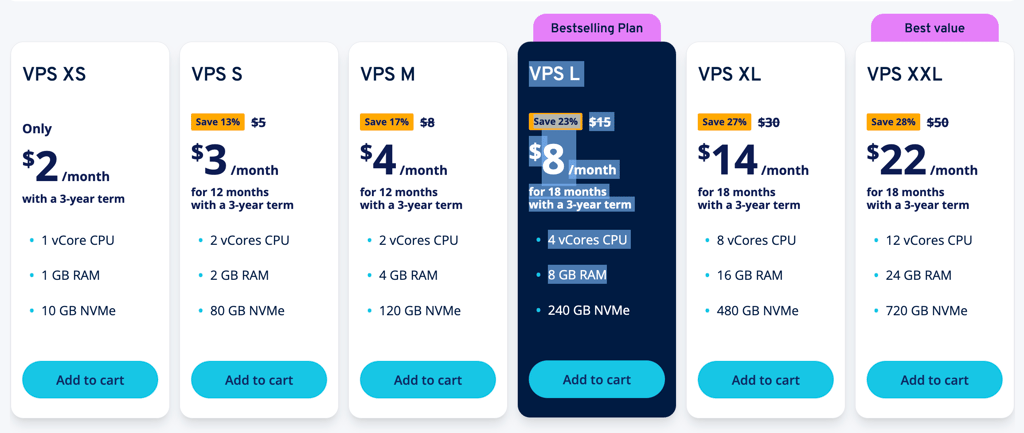
High-performance link building in 2026 needs a departure from standard server configurations. As search engine algorithms have actually grown more advanced, the volume and quality of automated submissions need to scale accordingly. For those running GSA Online search engine Ranker (SER) on a Windows Server 2026 VPS, the objective is to reduce latency while taking full advantage of the variety of simultaneous active threads. A common high-spec VPS in 2026 often includes 32 or 64 virtual cores and upwards of 128GB of RAM. Without specific tweaks, Windows will throttle the extremely processes that GSA SER relies on for high-speed operation.
The first step includes choosing the ideal version of Windows Server 2026. While the Desktop Experience is much easier to browse, the Server Core setup provides a smaller sized footprint and fewer background procedures. For those who need the GUI, the first job after setup is to remove away the telemetry and visual impacts that take in CPU cycles. Every percentage point of CPU usage saved from the os is another thread offered for link placement. Online marketers who focus on high-performance SEO discover that these initial actions dictate the ceiling of their everyday validated link counts.

Enhancing the Windows Server 2026 Networking Stack
Windows Server 2026 handles network connections differently than its predecessors. By default, the system is tuned for stable, long-term connections instead of the countless rapid-fire, short-lived connections created by GSA SER. To repair this, you need to modify the registry to deal with a greater volume of TCP/IP traffic. Increasing the MaxUserPort setting permits the system to open more ephemeral ports simultaneously. In 2026, setting this worth to its optimum of 65534 is basic practice for high-thread counts.
Another crucial modification is the TcpTimedWaitDelay. This setting identifies the length of time a connection remains in the TIME_WAIT state before the port is released back into the swimming pool. Minimizing this from the default 240 seconds to 30 seconds guarantees that ports are recycled quickly. Without this change, GSA SER may report countless threads, however the real outbound connections will be topped by the OS, causing a high number of socket mistakes. Those who have invested in Asia Virtual Solutions Proven Proxy Solutions understand that network throughput is frequently the most typical concealed bottleneck in automated campaigns.
CPU Affinity and Concern Management
Windows Server 2026 uses an updated scheduler that is much better at managing high core counts, but GSA SER can still fight with thread contention when the CPU is pushed to 90% use. One method to manage this is by setting the procedure concern of GSA SER to "Above Regular" or "High." This ensures that the software gets initially access to CPU cycles ahead of background system jobs. It is seldom advisable to use "Realtime" priority, as this can secure the entire OS, making the VPS unresponsive.
For servers with multiple physical CPUs or NUMA nodes, setting CPU affinity can prevent the overhead of thread migration in between cores. If you are running multiple instances of GSA SER, or if you are running a captcha solver alongside it, designating each application to particular cores can enhance efficiency. Designating a captcha breaker to cores 0-7 and GSA SER to cores 8-31 avoids the heavy OCR processing from slowing down the submission engine. This granular control is what separates a standard setup from one capable of sustaining 2000+ threads without crashing.
Storage Efficiency and SQL Lite Handling
In 2026, NVMe Gen 7 drives are the requirement for high-spec VPS providers. GSA SER relies greatly on little read and write operations, particularly when upgrading its SQL Lite databases and job files. The speed of these disks is crucial. To even more improve performance, it is possible to move the GSA SER "AppData" folder to a RAM disk. Considering That 128GB of RAM prevails in 2026, designating 16GB to a high-speed RAM disk can virtually eliminate disk I/O wait times.
If a RAM disk is not a choice, ensure that Windows Write Caching is enabled on your NVMe drive. Additionally, the GSA SER internal settings for database maintenance ought to be set up to "vacuum" the databases regularly. Large job files with millions of target URLs can decrease the software application as it browses for the next site to post to. Keeping these files on the fastest available storage tier ensures that the threads are not idling while waiting for the disk to react. Experience with Asia Virtual Solutions Works suggests that even the fastest CPU can not make up for sluggish disk gain access to during high-volume durations.
Configuring GSA SER Internal Thread Settings
When the os is tuned, the focus moves to the software application settings. A typical error is setting the thread count too expensive immediately. In 2026, the sweet spot for a 32-core VPS is typically in between 800 and 1200 threads, depending on the intricacy of the websites being targeted. If you use heavy engines like those needing complete web browser emulation, this number will be lower. If you are concentrating on quick engines like blog site remarks or guestbooks, you can push the count higher.
The "Timeouts" embeding in GSA SER is likewise a significant consider thread effectiveness. If a thread is waiting 180 seconds for a website to load, it is a wasted resource. In 2026, a lot of fast-loading websites react in under 10 seconds. Setting the timeout to 30 or 45 seconds allows GSA SER to drop sluggish targets and proceed to the next one. This keeps the thread pool active and productive. Keeping an eye on the "Threads" vs. "Active" screen in the software helps determine if your timeouts are too long or your proxies are too sluggish.
Handling Security and Firewall Software Overload
Windows Defender in Server 2026 is a lot more aggressive than in previous variations. Its real-time scanning can substantially decrease GSA SER as it constanty checks the countless small files produced throughout the submission process. It is needed to add the GSA SER setup folder and the job information folders to the Protector exemption list. Some users pick to disable the firewall completely if the VPS is behind a hardware firewall program offered by the host, however this ought to be made with care.
The firewall itself can likewise end up being a bottleneck. Every new connection is checked versus the firewall software guidelines. If you have a huge list of obstructed IPs or complicated guidelines, the CPU overhead per connection boosts. Keeping the firewall rules easy and using GSA SER's internal "Worldwide Blacklist" for bad IPs is frequently a more effective method to handle security without sacrificing speed. This technique keeps the system lean and concentrated on the primary job of link generation.
Proxy Latency and Connection Stability
No amount of server optimization can fix poor proxy efficiency. In 2026, the market has actually approached high-speed backconnect domestic proxies that can handle numerous concurrent demands. When setting up these in GSA SER, it is essential to match the thread count to the variety of proxy connections enabled by your service provider. If you have 500 proxy slots however run 1000 threads, half of your threads will continuously stop working with connection errors.
Testing proxy speed frequently is a requirement. GSA SER has an integrated proxy tester, but it is often better to utilize a dedicated tool to filter out any proxies with a reaction time over 1000ms. In 2026, low-latency connections are the primary driver of high success rates. By guaranteeing that the server and the proxies are in the exact same geographic region, or a minimum of on the very same foundation, you can shave milliseconds off each demand, which adds up to countless additional submissions throughout a day.
Maintenance and Long-Term Stability
A Windows Server 2026 VPS running at complete throttle will eventually encounter memory leakages or fragmented resources. A scheduled day-to-day reboot is an easy but efficient way to maintain peak efficiency. This clears the system cache and resets any hung processes. Moreover, cleaning out old "Recognized" and "Submitted" logs every few days keeps the project files small and snappy. GSA SER performs best when it is not slowed down by months of historical information that is no longer needed for active projects.

Monitoring tools can offer alerts if CPU or RAM usage exceeds specific limits for too long. In 2026, lots of VPS companies include fundamental tracking control panels that reveal these metrics in real-time. If you see that your thread count stays high however your submission rate drops, it is usually an indication that the OS is struggling with a resource traffic jam or your proxies are stopping working. Routine modifications to the configuration guarantee that the system stays optimized for the changing demands of the online search engine. Remaining ahead in the 2026 SEO world needs a mix of high-end hardware and a perfectly tuned operating system environment.