Speed to Market: The Benefit of Edge Architecture
Modern Strategies for Dispersed Environments in 2026
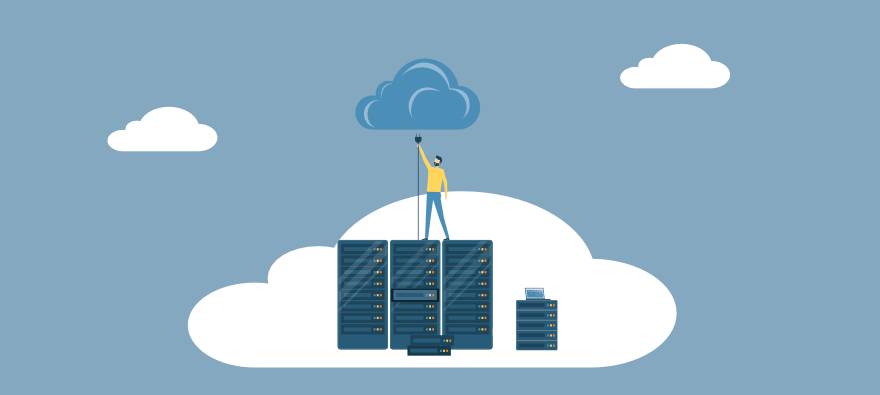
The functional requirements for high-performance computing have actually shifted substantially as 2026 progresses. Organizations no longer see numerous cloud service providers as a luxury or a backup plan. Rather, the focus has actually moved toward advanced coordination between disparate environments to make sure speed and uptime. Manual intervention for resource allocation is largely a thing of the past. Modern control airplanes now deal with millions of micro-adjustments per 2nd, guaranteeing that work reside where they are most efficient based on real-time latency and expense metrics.
Information residency laws and regional performance requirements have required a move away from central architectures. Large business often find themselves managing work throughout four or five different suppliers. This complexity requires a unified management layer that abstracts the underlying facilities. By 2026, the market has actually decided on standardized protocols that allow containers and serverless functions to move throughout service providers with very little setup changes. This fluidity is vital for preserving an one-upmanship in markets where milliseconds of delay lead to lost income.
High-Performance Demands and Distributed Infrastructure
Efficiency requirements in 2026 are driven by the massive growth of real-time information processing. Whether it is autonomous logistics or high-frequency financial modeling, the underlying hardware needs to respond quickly. Specialized hardware, such as advanced processing units, is typically dispersed throughout different areas to keep compute resources near the data source. This geographical spread avoids the bottlenecking that prevailed when data needed to take a trip back to a primary information center.
Performance in 2026 is determined by the capability to scale vertically and horizontally without over-provisioning. Modern orchestration tools use predictive analytics to anticipate traffic spikes. If a localized event triggers a sudden rise in need, the system immediately spins up instances in the nearest offered zone, regardless of which business owns the physical server. This level of coordination counts on deep combination with application programming user interfaces that have actually ended up being more uniform throughout the market over the last few years.
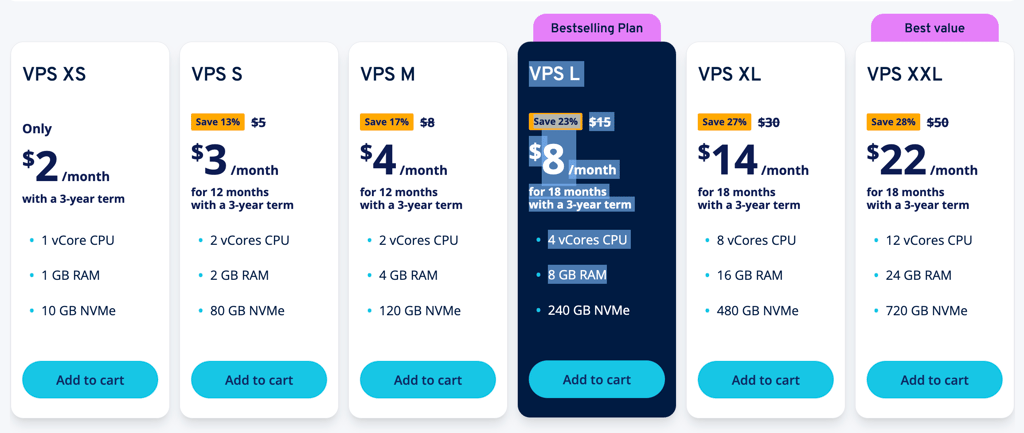
Technical groups are focusing on SEO NEO Pricing to manage these complicated interactions. This approach lowers the overhead connected with maintaining separate workflows for each service provider. Rather of having experts for every single different cloud environment, engineers now use a single interface to specify the preferred state of the entire system. The orchestration layer then manages the specific translations needed for each target environment, ensuring consistency in security policies and efficiency standards.
Scalability Solutions and Resource Optimization
The cost of compute power stays a significant element in 2026. While raw processing power has actually become more economical, the energy requirements for huge data centers have actually caused variable rates based upon the time of day and regional power schedule. Smart orchestration systems now include "carbon-aware" and "cost-aware" logic. These systems can move non-critical batch tasks to regions where sustainable energy production is at its peak or where spot pricing is at its least expensive. This automatic financial management is a necessity for maintaining healthy margins in data-heavy sectors.
Scalability is no longer almost adding more servers. It includes the smart distribution of stateful and stateless parts. In 2026, using Asia Virtual Solutions Cloud SEO Review has actually become a standard method for guaranteeing that user data remains available even during provider-specific interruptions. By sharding data throughout multiple clouds, companies protect themselves versus the overall failure of a single vendor. This technique likewise assists in complying with stringent information sovereignty guidelines that need certain details to remain within specific national borders while still being accessible to international applications.
Automated troubleshooting has actually also reached a new level of sophistication. When an efficiency destruction is spotted, the orchestration layer does not simply inform a human operator. It starts a series of diagnostic tests and, if needed, moves the affected services to a healthy environment. This self-healing ability is important for 2026 infrastructure, where the sheer number of moving parts makes manual tracking impossible for even the biggest teams.
The Role of Intelligence in System Coordination
Machine knowing designs devoted to system health are now embedded directly into the orchestration stack. These models analyze historic efficiency information to identify patterns that precede a failure. By 2026, these systems can identify "quiet" failures-- instances where a service seems running however is returning incorrect data or reacting too slowly. The system can then isolate the bothersome node and replace it with no influence on completion user.
The need for SEO NEO for Digital Teams reflects the growing requirement for specific know-how in these automated environments. Maintaining the logic that governs these shifts needs a deep understanding of both networking and software architecture. As 2026 continues, the space between traditional IT management and modern automated orchestration widens. Success depends on the capability to rely on the automation while keeping adequate oversight to step in when the designs experience an unprecedented situation.
Security in a multi-cloud environment has moved toward a zero-trust model that is enforced at the orchestration level. Every interaction in between services, despite whether they are on the exact same cloud or various ones, is encrypted and authenticated. Identity management has ended up being the brand-new boundary. By 2026, the orchestration layer handles the rotation of security secrets and the enforcement of least-privilege gain access to across the whole fleet of servers. This guarantees that a breach in one small part does not jeopardize the integrity of the whole system.
Future Outlook for Infrastructure Resilience
Looking ahead through the remainder of 2026, the focus will likely move towards even tighter integration between edge devices and core cloud environments. The difference between a "server" and a "gadget" is becoming progressively blurred. Orchestration tools are now handling work on regional 5G base stations and even high-capacity industrial sensors. This extension of the cloud to the extreme edge enables processing speeds that were formerly thought impossible.
Resilience is constructed into the extremely fabric of these systems. The 2026 technique to facilities is one of constant motion. Services are not static; they are constantly being optimized, moved, and updated. This environment needs a shift in mindset from developing "permanent" structures to handling "flowing" resources. The companies that flourish are those that can adjust their resource consumption in real-time, benefiting from the very best offered innovation at any offered second.
The reliance on automated resource managers will just increase as data volumes grow. The complexity of 2026 technology requires a level of precision that human operators simply can not match. By offloading the repeated tasks of scaling, patching, and stabilizing to specialized orchestration layers, technical teams are totally free to concentrate on the top-level logic that drives their specific industry forward. This shift marks a new era in calculating where the physical location of a server is secondary to the logic that controls it.
Standardization will continue to be a primary style. As more companies embrace open-source orchestration standards, the friction of moving between clouds will continue to reduce. This competition among suppliers is beneficial for the end user, as it drives down expenses and motivates the quick rollout of brand-new features. In 2026, the cloud is no longer a location but an utility that is consumed as needed, handled by intelligent systems that guarantee every byte of data is handled with optimal effectiveness.