Changing Digital Effectiveness Through Green Innovations

The Shift Towards Predictive Stability in 2026
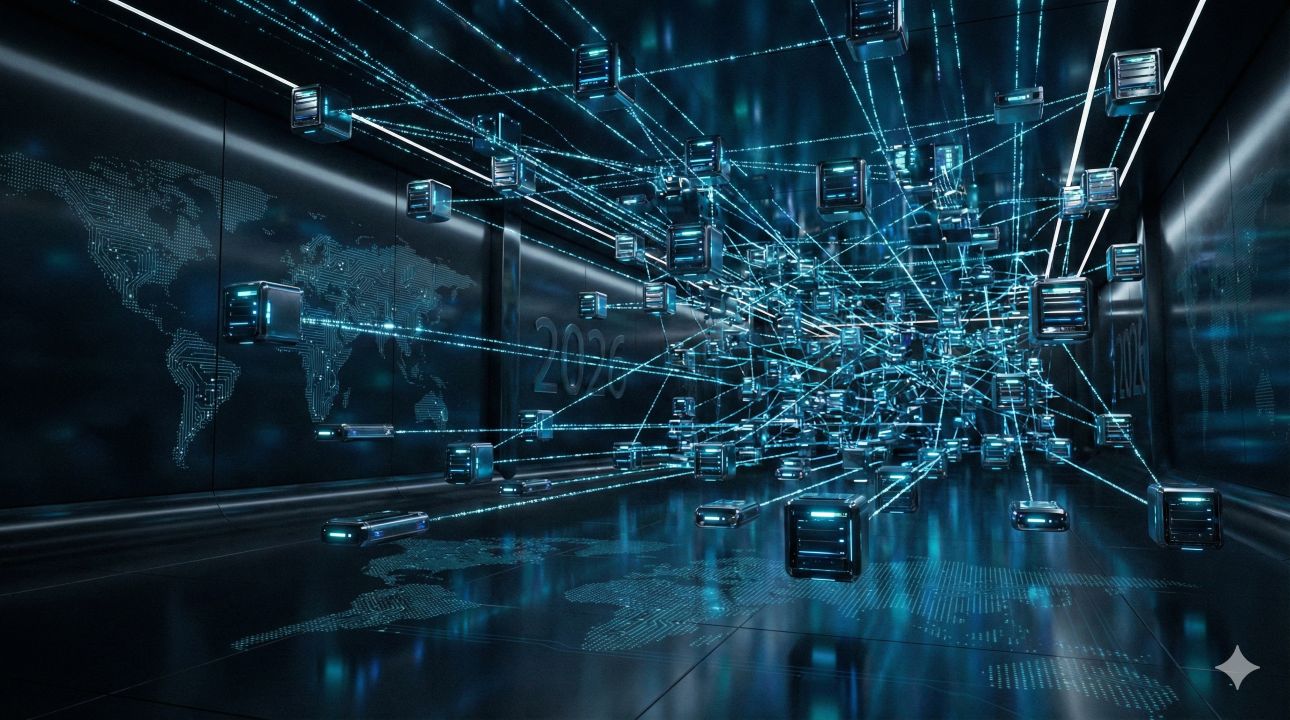
Enterprise data centers no longer function as static warehouses for details. By 2026, the shift from reactive management to predictive automation has redefined what it indicates to preserve uptime. Massive operations now depend upon intelligent infrastructure to manage the enormous spikes in traffic that characterize the modern-day digital economy. This transition is not about easy speed increments but about the capability of a system to expect failure before a single byte of information is lost. Systems that as soon as required continuous manual tuning now rely on machine knowing models to adjust resources in real-time, ensuring that hardware remains ahead of user need.
Conventional hosting designs often battled with the lag between a traffic surge and the provisioning of new virtual devices. In 2026, that hold-up is mostly a relic of the past. Modern architectures utilize deep discovering to evaluate historical traffic patterns, social networks trends, and even international news events to scale capacity up minutes before the real load hits the server. This proactive approach keeps applications responsive during peak periods while keeping a lean profile during peaceful hours. Companies that depend on enterprise-grade hosting discover that this automated insight avoids the pricey crashes that were common in previous years.
Advanced Strength Through Self-Healing Protocols
Stability in 2026 is specified by the strength of the underlying hardware. When a physical element begins to show signs of deterioration-- such as rising temperature levels or increased latency-- autonomous agents move work to healthy nodes without human intervention. This procedure occurs behind the scenes, often without the IT department receiving an alert until the job is total. Lots of organizations count on Asia Virtual Solutions to provide this layer of security, ensuring that localized hardware failures do not escalate into site-wide failures.
The mechanics of self-healing involve more than just moving information. In 2026, AI-optimized systems can reword execution paths on the fly to bypass overloaded network paths or malfunctioning storage selections. This level of granular control implies that even during significant internet disruptions, business services remain available. The focus has actually moved far from building "unbreakable" systems toward structure systems that recuperate so quickly that the end user never notices an issue. Counting on such sophisticated server management permits companies to meet rigorous service level arrangements that were as soon as considered difficult.
Resource Performance and Economic Sustainability
Waste was a substantial issue in early cloud computing, where over-provisioning was the standard approach for avoiding downtime. In 2026, the focus is on "just-in-time" resources. AI controllers keep track of CPU cycles, RAM usage, and energy usage with accuracy, trimming excess capacity that is not actively serving a purpose. Asia Virtual Solutions SEO NEO Review has emerged as a requirement for business aiming to align their technical expenditures with actual usage. By removing the financial problem of idle servers, enterprises can reroute their budgets towards product development and user experience.
Energy consumption has also become a primary metric for enterprise success in 2026. Data centers that utilize AI to enhance cooling and power circulation are considerably more affordable than their older equivalents. These systems can anticipate thermal hotspots and rearrange workloads to cooler parts of the facility, extending the life-span of the hardware and decreasing the total carbon footprint. Effectiveness is no longer simply a technical objective; it is a core component of the functional technique for any firm utilizing cloud-based platforms.
Automated Security and Danger Neutralization
The risk environment in 2026 is much faster and more intricate than ever previously. Manual security patches and human-led tracking are no longer sufficient to stop coordinated botnets or automated exploits. Instead, business stability is protected by AI security layers that run at the package level. These systems determine anomalous habits patterns rather than relying on a database of recognized signatures. When a brand-new threat emerges, the hosting environment can isolate the affected section in milliseconds, avoiding lateral movement throughout the network.
Meeting the high requirements for Asia Virtual Solutions for Automated Link Building involves a deep integration of security into the hosting fabric. Information is encrypted not simply at rest and in transit, but also while in usage within the CPU. This "personal computing" approach ensures that even if a breach occurs at the hypervisor level, the real business information stays unreadable. For sectors like financing and healthcare, where information stability is the greatest top priority, these 2026 security standards are non-negotiable. Utilizing specialized hosting environments that offer these features offers a level of defense that software-only options can not match.
Scalability at the Edge
Latency is the enemy of stability for worldwide applications. In 2026, enterprise cloud solutions have actually moved closer to the edge, positioning computing power in countless smaller sized nodes located near the end users. AI handles the distribution of these workloads, deciding which data needs to be processed locally for speed and which must be returned to a central center for long-lasting storage. This hybrid model avoids traffic jams at central data centers and supplies a more constant experience for users regardless of their physical area.
Edge computing in 2026 also help in catastrophe healing. If a significant regional information center goes offline, the edge nodes can continue to manage fundamental functions, supplying a "stylish deterioration" of service instead of a total blackout. This dispersed architecture is specifically beneficial for high-availability systems that support vital facilities or real-time communication tools. By spreading the load throughout a larger location, business gain a level of insurance coverage against regional failures or geopolitical instability.
Consistency in a Fragmented Digital Sector
The intricacy of managing multi-cloud environments in 2026 has led to the rise of unified management layers. These platforms use AI to bridge the gap between various suppliers, guaranteeing that a single set of stability policies uses across the entire fleet of servers. Whether an application is working on a personal rack or a public cloud, the efficiency remains consistent. This consistency is vital for preserving brand trust, as users in 2026 have really low tolerance for sluggish load times or periodic connection.
Technical teams now invest less time on "keeping the lights on" and more time on high-level architecture. The automation of regular upkeep, scaling, and security means that the human function has shifted toward oversight and strategy. As we check out the lens of 2026, the most successful enterprises are those that have totally welcomed these self-governing systems. Counting on modern infrastructure solutions is no longer a high-end but a requirement for making it through in a market where stability is the ultimate competitive benefit. The focus stays on developing a structure that is not only strong but also smart enough to adapt to the unidentified challenges of the coming years.